Signs of hidden fire damage behind walls after a small fire
A small fire can leave hidden damage inside your walls. Here are the signs Garden Grove homeowners should watch for and when to call for an inspection.
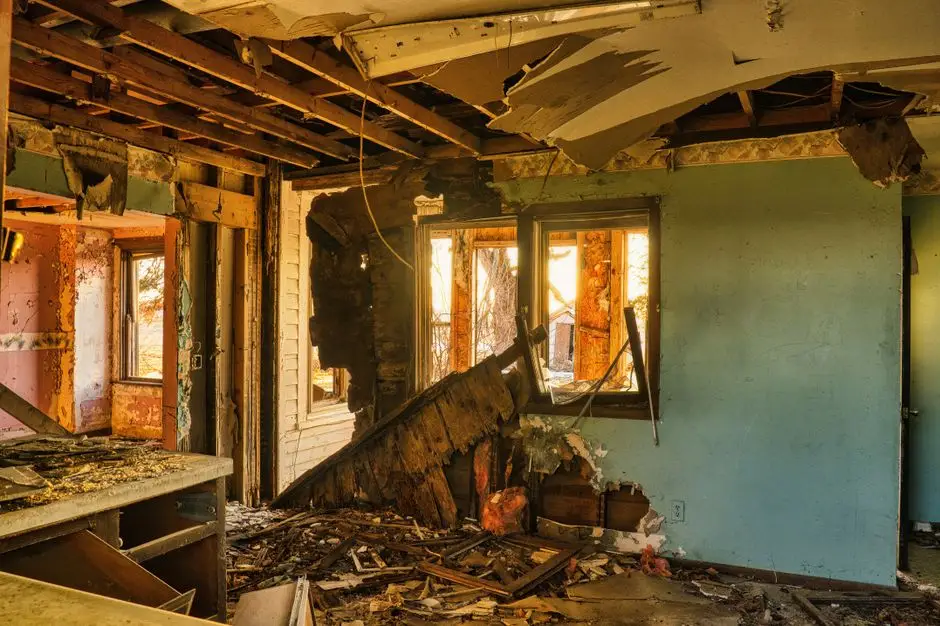
Hidden fire damage behind walls after a small fire shows up as a persistent smoke smell, discolored drywall, warped baseboards, or a faint charring you can't see. In Garden Grove, even a contained kitchen fire can push heat and soot into wall cavities that look untouched from the room side. This post walks through the specific signs we look for, how thermal imaging detects what your eyes miss, and when it's time to call a professional.
Why small fires hide damage behind walls
Heat rises and travels through the path of least resistance - inside wall cavities, above ceiling drywall, and along plumbing and electrical chases. A fire that starts on a stovetop or in a bathroom exhaust fan can send 300°F to 500°F air into a stud bay within minutes. The drywall facing the room may only show light scorching, while the back side of that same sheet is charred and the framing behind it has begun to pyrolize.
Garden Grove has a lot of mid-century tract homes built between 1950 and 1975. Those houses often have original wood lath or early drywall, minimal fire blocking between floors, and balloon-frame construction in some two-story models. All three features let fire and smoke move vertically and horizontally far from the room where the fire started. That's why a "small" fire in a 1,200-square-foot home on Magnolia Street can leave hidden damage 15 feet away in a closet wall.
Smoke residue is the other half of the problem. Soot particles are 0.1 to 4 microns - small enough to slip through drywall seams, outlet boxes, and light switch plates. They carry the smell with them. If you've ever walked into a house two weeks after a fire and still smelled it in a bedroom that never burned, that's why.
Signs of hidden fire damage behind walls after a small fire in Garden Grove CA
Signs of hidden fire damage behind walls after a small fire in Garden Grove CA include visible clues on the room side and sensory clues you can't see. Here are the ones we check first on every inspection.
- Smoke smell that returns after cleaning. If the odor comes back within 24-48 hours of wiping surfaces, the source is inside a wall cavity, HVAC duct, or attic.
- Discolored or bubbling drywall. Paint that blisters or yellows in a pattern - especially above an outlet or near a door frame - usually means heat pushed through from behind.
- Warped baseboards or crown molding. Wood moves when it's heated and dried. A 1/8-inch gap that wasn't there before is a signal.
- Loose or scorched outlet covers. Pull the cover and look at the box. Blackened wire insulation or melted plastic means the fire was in that wall.
- Faint crackling or popping sounds. Rare, but if you hear it hours after the fire is out, call 911 - it can mean a hidden ember is still active.
- Dead outlets or tripping breakers. Heat damages wire insulation. If circuits on the far side of the house started tripping after the fire, the wiring in that wall is suspect.
- Cold or hot spots on the wall. Run your hand along the wall. A patch that feels noticeably different from the surrounding area often sits over a charred stud bay.
One sign alone doesn't prove hidden damage. Two or more together - especially smoke smell plus a discolored outlet - almost always means we need to open the wall and look.
How to tell if fire damage is behind drywall in Garden Grove
You can't tell for certain without looking behind the drywall, but thermal imaging gets you 90% of the way there without cutting. A thermal camera reads surface temperature differences. Charred framing, moisture from firefighting water, and compressed insulation all show up as distinct hot or cold zones on the screen. We use thermal imaging on every fire inspection in Garden Grove before we open anything.
The process is straightforward:
- Walk the room with the thermal camera and mark any anomaly with painter's tape.
- Confirm each anomaly with a moisture meter and a non-penetrating stud finder.
- Open a 12-inch by 12-inch inspection hole at the most suspicious spot - usually the stud bay nearest the fire origin.
- Use a borescope camera to look inside the cavity without removing more drywall than necessary.
If the framing is charred more than 1/8 inch deep, or if the char covers more than 10% of a stud's cross-section, that stud gets replaced. Surface char that wipes off with a wire brush can sometimes be treated and sealed, but that's a judgment call a licensed contractor makes on site.
For homes in the Fire Damage Restoration in West Garden Grove area, we often find that the original 1960s wiring has brittle insulation that fails the moment heat touches it. That's a hidden fire risk even after the visible fire is out.
Why does my house still smell like smoke after a small fire?
Smoke smell lingers because soot particles and volatile organic compounds (VOCs) have soaked into porous materials - drywall paper, wood studs, insulation, carpet padding, and ductwork. Wiping surfaces removes what's on the surface. It doesn't touch what's inside the wall cavity or embedded in the back of the drywall.
Three things make the smell worse:
- Humidity. Garden Grove's coastal influence pushes relative humidity above 60% on many mornings. Moisture re-releases trapped smoke odor.
- HVAC cycling. Every time the system runs, it pulls air across soot-contaminated duct surfaces and redistributes the smell.
- Heat. A warm afternoon heats the wall cavity and drives odor compounds back into the room.
If the smell is still there two weeks after the fire, the source is behind a wall, above a ceiling, or inside the duct system. Surface cleaning won't fix it. Odor Removal After Fire Garden Grove CA uses thermal fogging, hydroxyl generators, and sealed cavity treatment to neutralize the source, not just mask it.
Should I open walls after a small fire in Garden Grove?
Open the wall if you have two or more of the signs above, if the fire was inside a wall (electrical, outlet, or switch), or if the smoke smell persists past 10 days. Don't open walls just because there was a fire - you'll create unnecessary repair work and possibly disturb asbestos in pre-1980 homes.
If your home was built before 1980, assume the drywall, joint compound, and some insulation contain asbestos until a lab test says otherwise. Cutting into it without containment spreads fibers through the house. That's a $3,000 to $8,000 mistake in 2026 pricing for a typical Garden Grove ranch home.
When we open walls, we follow a simple rule: open the smallest area that lets us confirm or rule out damage, then close it back up the same day with a proper patch. We don't leave holes for the homeowner to deal with.
What to watch out for
Most of the calls we get about hidden fire damage come from homeowners who did one of these five things after a small fire.
- Painting over smoke-stained drywall. Latex paint doesn't seal smoke odor. It bleeds through within weeks. You need a shellac-based primer first.
- Running the HVAC to "clear the air." That pushes soot deeper into the duct system and every room in the house.
- Assuming the fire department's all-clear means the house is fine. They check for active fire and structural safety. They don't inspect for hidden smoke damage.
- Waiting on the insurance claim before calling a restoration company. Smoke residue sets into surfaces within 72 hours. After that, some materials can't be saved.
- Hiring a general handyman to patch drywall. Patching without treating the cavity traps odor and hides any charred framing. You want a Structural Repair After Fire Garden Grove CA contractor who inspects before closing.
When to call a professional
Call a professional if the smoke smell is still there after 10 days, if you see any of the visual signs above, or if the fire was anywhere near electrical wiring. SafeCrest handles Fire Damage Restoration across Garden Grove and the surrounding Orange County area. We start with a thermal imaging inspection, document what we find for your insurance claim, and only open walls where the evidence points.
For fires that happened in the last 24 hours, we also offer Emergency Fire Damage Restoration Garden Grove CA with board-up and temporary weather protection so the damage doesn't get worse while the claim is processed.
Frequently Asked Questions
How do I know if there is hidden fire damage behind my walls in Garden Grove CA?
Look for a smoke smell that returns after cleaning, discolored or bubbling drywall, warped baseboards, and scorched outlet covers. Two or more of those together usually means hidden damage. A thermal imaging inspection confirms it in about 45 minutes without cutting into the wall.
Can a small fire cause hidden structural damage in Garden Grove?
Yes. A fire that reaches 300°F for more than 10 minutes can char framing and weaken studs inside a wall cavity. In Garden Grove's older tract homes, that heat also damages brittle wiring insulation, which is a fire risk even after the visible fire is out.
Why does my house still smell like smoke after a small fire in Garden Grove California?
Soot particles and VOCs soak into drywall paper, insulation, and ductwork. Surface cleaning doesn't reach them. If the smell is still there two weeks after the fire, the source is inside a wall cavity or the HVAC system and needs professional odor removal.
Do I need a professional inspection after a small fire in Garden Grove?
Yes, if you have any of the signs above or if the fire was near electrical wiring. A professional inspection with thermal imaging and a moisture meter costs $250 to $600 in 2026 and can save you thousands in hidden repairs or a second fire.
Get help with Fire Damage Restoration in Garden Grove
If you're seeing any of these signs, don't wait for the smell to get worse. We'll inspect, document, and give you a clear plan - usually the same day you call.
Call SafeCrest at (714) 226-9331 for a thermal imaging inspection and a written estimate.